Sometimes Tears Are the Best Medicine
We live in a time that is often described as the easiest in human history. Technology advances at a rapid pace, living standards have risen for many, and distractions are endless. On the surface, life can appear more comfortable than it has ever been. Yet comfort is only one side of the picture. Alongside it exists a constant and often invisible pressure: to compete, to perform, to maintain, to advance, and to keep going without pause. The pace is fast, the demands are high, and the weight can accumulate quietly.
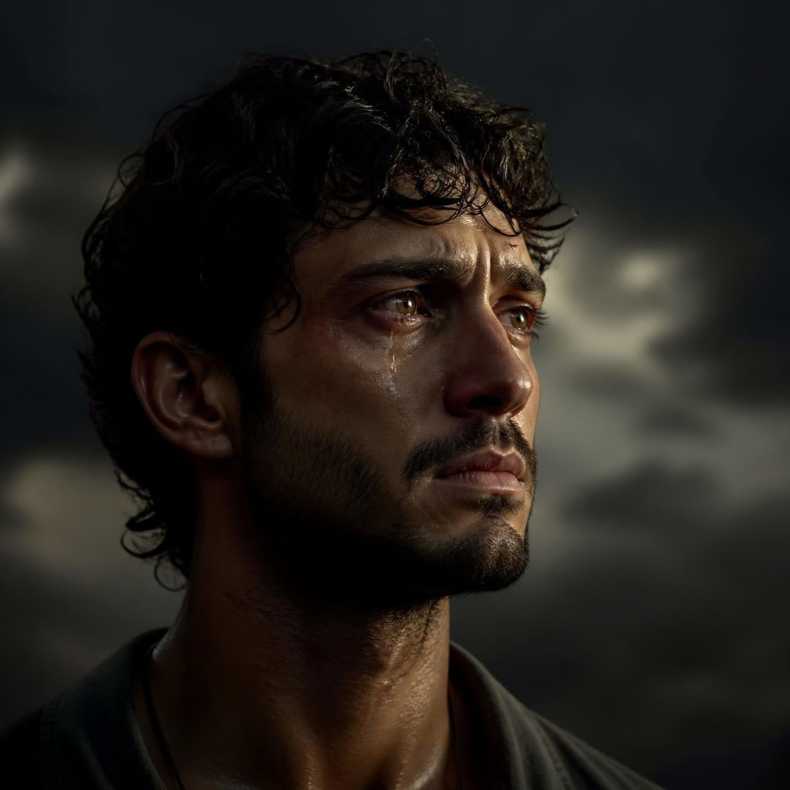
One of the cultural ideas that still travels with us in this environment is the belief about what it means to “be a man.” The phrase “real men don’t cry” is familiar to many. It carries the expectation that men should carry heavy loads without visible strain, protect and provide, absorb difficulty, and remain composed no matter what arrives. Strength is defined as silence. Emotion is treated as a liability.
That idea needs to be set aside. It does not serve the people it claims to strengthen. Yes, there is a real responsibility that many men feel, to be steady, to protect, and to endure. That responsibility has value. But no one can carry every weight indefinitely without release. Pressure that is never expressed does not disappear, it settles deeper. A person is not a statue. A person is not made of stone. The body and the inner life both reach limits.
Crying is one of the ways those limits are acknowledged. It is not the only way, and it is not required in every difficult moment. Yet when it comes, it is simply human. Admitting pain, acknowledging flaw, and allowing the weight in the heart to surface takes a form of strength that stoicism alone cannot supply. Some of the most respected figures in history, leaders, fighters, and thinkers, were recorded as having wept. Those moments did not diminish them. In many accounts they revealed the humanity that made their other qualities meaningful.
No one has the right to judge another person for tears. No one has the authority to label it weakness or to use it as material for mockery. Real strength includes the capacity to face what is actually present inside: fear, grief, exhaustion, and disappointment, without needing to pretend it is absent. Real men can cry. Real men can look at their emotions without shame. There is nothing inherently weak about that recognition, and nothing to fear in it.
The cultural script that says otherwise has done enough damage. It has taught too many people to treat their own inner life as something that must be hidden or denied. Releasing that script does not mean abandoning responsibility or collapsing under every difficulty. It means refusing to add the extra burden of forced silence to an already heavy load. Tears, when they come honestly, can function as a form of relief: a pressure valve, a moment of truth, a small restoration of balance.
You are allowed to feel the full range of what it is to be human. You are allowed to set down the expectation that strength must always look like stone. Sometimes the most practical medicine available is simply to stop holding everything in.
Real men do cry. There is no shame in it.
Remember to always stay strong
Leave a Reply