What’s Good for the Soul Isn’t Always Good for the Body
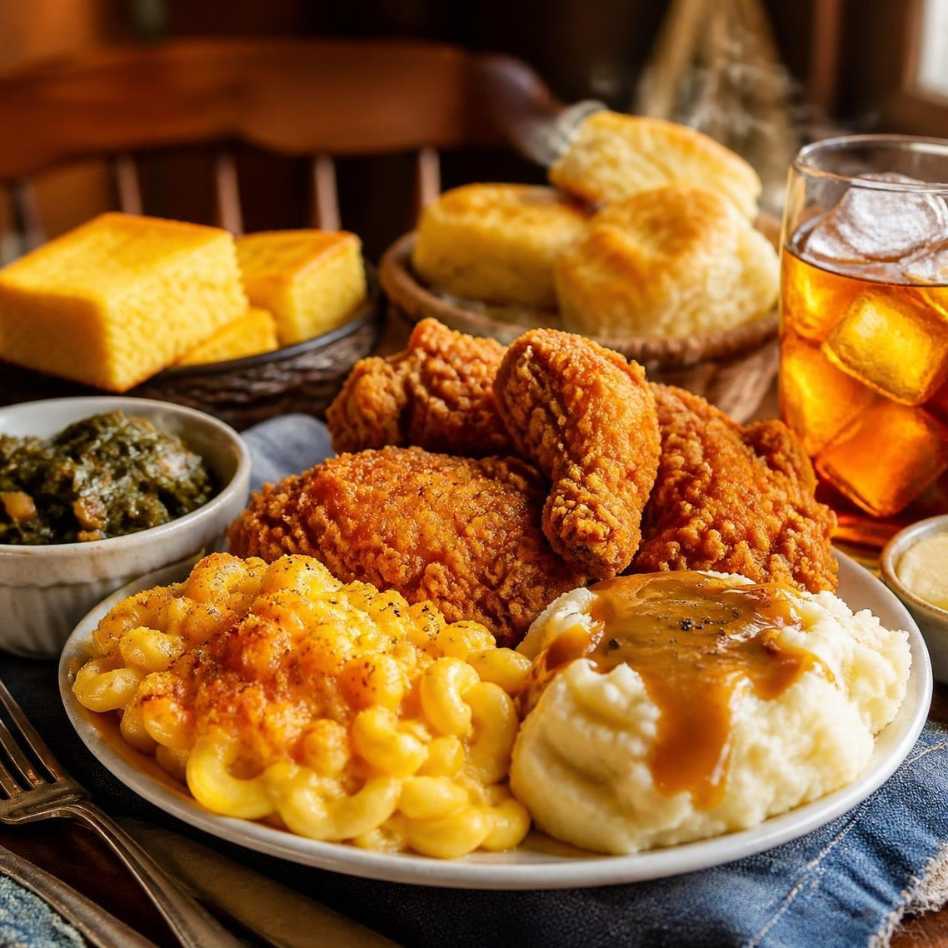
Most of us have heard the phrase “soul food.” The image that usually appears is familiar: macaroni and cheese, fried chicken, barbecue ribs, cornbread, and other dishes rich in flavor and memory. Yet the deeper question is not only about the menu. But, what is soul food, really?
The late Terry A. Davis once remarked that it is more important to save your soul than to save your body. He used the idea as an analogy for the kind of food that nourishes something beyond physical health, something that feeds the inner life even when it does not serve the body’s strictest interests. Whether or not one agrees with every aspect of his thinking, the distinction he drew is worth considering.
We live in a culture that places intense focus on the body. Calorie counting, exercise routines, weight goals, and beauty standards often function with near religious seriousness. People monitor, measure, and optimize their physical condition with remarkable dedication. At the same time, rates of anxiety, depression, and other forms of mental and emotional distress remain high. The imbalance is hard to ignore. Enormous attention is given to the physical vessel, while the inner life, the part of us that experiences meaning, comfort, memory, and quiet joy is frequently left under-nourished.
Soul food, in the broader sense, is anything that feeds that inner dimension. It is not always unhealthy in the conventional sense, yet it often includes things that pure physical optimization would discourage: a bowl of ice cream, a piece of chocolate, a cold soft drink, a burger eaten without guilt. These are not merely empty calories. For many people they carry associations of comfort, celebration, childhood, or simple pleasure. In the moment of eating them, something in the spirit lifts. The soul, so to speak, jumps for joy.
This does not mean that physical health should be discarded, the body matters. Neglecting it entirely brings its own costs, but he point is one of proportion and priority. A life spent exclusively in the service of bodily perfection can leave the inner person starved. Conversely, allowing occasional space for what truly comforts and delights, without turning it into constant excess, can restore a sense of balance that strict discipline alone does not provide.
At the end of the day, the claim still carries weight: it is more important to save the soul than to save the body. The body is temporary and subject to eventual decline no matter how carefully it is managed. The inner life, the capacity for meaning, connection, memory, and quiet contentment, that shapes the quality of the years we actually live. Feeding that inner life, even when it occasionally conflicts with optimal physical metrics, is not mere indulgence. It is a form of care for the part of us that makes the rest of life feel worth inhabiting.
Soul food, then, is less about a specific plate of food and more about the deliberate choice to nourish what is deepest in us. Sometimes that choice looks like a rich meal shared with others. Sometimes it looks like a small, private pleasure taken without apology. In either case, the principle remains the same: the soul needs feeding too.
Always remember to stay strong.
Leave a Reply