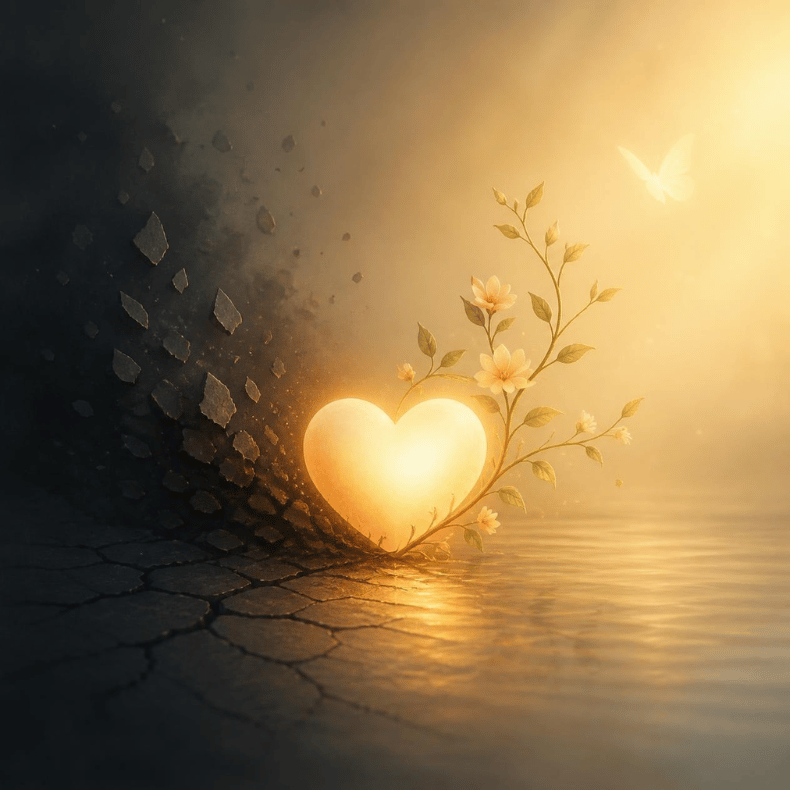
How we feel in our hearts
Huey Lewis once sang: “The power of love is a curious thing. Make a one man weep, make another man sing.” The line is simple, yet it captures something true. Love is one of the most familiar and most complicated forces in human life. We see it portrayed everywhere: on screens, in stories, in public displays of affection, and yet living it is rarely as straightforward as the images suggest.
Even the ancient Greeks recognized that love is not a single experience. They distinguished different forms: the deep affection of family, the loyal bond of friendship, the passionate intensity between partners, and other shades in between. Modern science often explains love as a combination of chemicals and electrical signals in the brain, capable of producing effects as powerful as many strong drugs. That explanation accounts for the intensity, the urgency, and the way love can override ordinary judgment. Still, many people sense that love exceeds what biology alone can fully describe. It feels closer to a force of nature mixed with something almost magical, an energy that moves through both heart and mind.
Love can drive extraordinary acts. It can push a person past ordinary limits, the way a parent might confront danger to protect a child, or someone might risk everything for the people they care about most. In those moments love becomes fuel for courage and endurance. Yet the same force can also wound. Love can blind us, make us stubborn, or keep us holding on long after the situation has changed. It can leave the heart aching, the mind restless, and the inner self burning with a heat that feels almost physical. Grief after loss, the pain of love that is not returned, or the slow erosion that comes when life’s complications interfere, all of these show the other side of its power.
I have lived inside that intensity. There was a time when love was the central driving force in my life. It gave me hope and strength. It helped me face fears and confront challenges I might otherwise have avoided. Later, that same love became entangled with hurt, fear, anxiety, and a heavy sense of loss. The pain did not come because the love was one-sided. It came because life introduced changes that my heart, still full of that powerful attachment, struggled to accept. Even when my mind was in turmoil, the heart continued to grip what it knew. Love, in its simplest and most persistent form, refused to let go easily.
That persistence reveals something important. Love is more than chemistry and electrical impulses. It is also memory, desire, hope, fear, and the accumulated weight of shared experience. It is the thing that can build a life and the thing that, when circumstances shift, can make daily existence feel nearly unmanageable. Because of that dual capacity, the way we carry love matters. When it remains a source of connection and strength, it enriches. When it becomes a source of ongoing torment without resolution or support, it can exhaust the very person it once lifted
Huey Lewis’s lyric holds. Love really can make one person weep and another sing. The difference often lies less in the force itself and more in the conditions surrounding it, the changes life brings, and the capacity to adapt without losing the heart’s essential capacity to care. For anyone reading this, the hope is straightforward: may the love in your life be the kind that builds, sustains, and strengthens, rather than the kind that leaves you unable to find solid ground.
Love is powerful. Handle it with both openness and care.
Remember, always stay strong.
Leave a Reply