The Soul: What Makes You, You
Many people understand the soul as the “core” or essence of something, the inner quality that makes a thing what it truly is. Today we are not speaking about objects or abstract concepts. We are speaking about people: you, me, and every other human being.
One observation stands out when we look at the long history of science and technology. Despite enormous advances, no one has succeeded in creating genuine life or fully recreating the living mind of a person. From the mechanical figures imagined in Leonardo da Vinci’s time to the sophisticated artificial intelligence of the present day, human ingenuity has produced impressive imitations of movement, speech, and problem-solving. Yet, something essential remains missing. A machine may process information, respond to prompts, or even simulate conversation, but it does not become a person. That gap points toward what many have called the soul.
We are physical beings: skin, bone, muscle, and blood. Our brains operate through complex networks of synapses and electrical signals. Science can describe these processes in remarkable detail. Still, the sheer fact of consciousness, of a continuous inner life that feels uniquely, “mine” ,resists complete explanation. A brain without life is only tissue. Why can we not simply switch life on in the same way we power a machine? What animates the system and makes it a living, experiencing self? One answer is that the soul is the animating reality, the non-material dimension that turns biological processes into a conscious person.
Animals also possess brains, emotions, and the capacity to live and respond to the world. Their lives are real and often rich. Yet, human beings display an additional layer of awareness: the ability to reflect on time, mortality, meaning, morality, and the larger context of existence. These capacities are limited and imperfect, but they mark a distinction. The soul, in this view, is the factor that enables that deeper self-awareness and gives each person a unique inner identity.
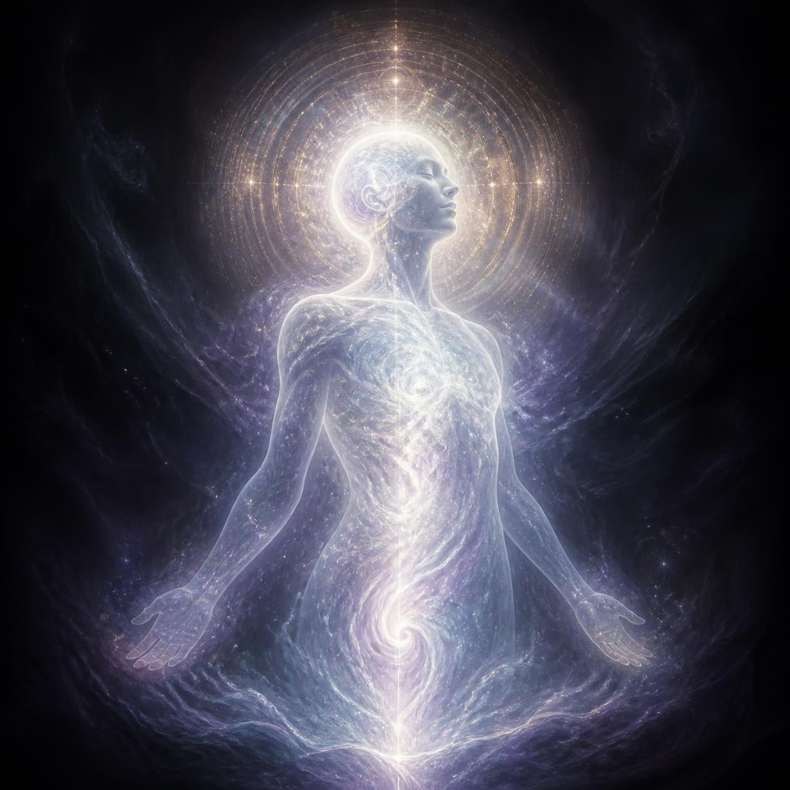
The soul is therefore more than a poetic idea. It is what makes you recognizably yourself across changing circumstances, memories, and stages of life. Bodies age, thoughts shift, and external conditions change, yet something continuous remains, the sense of being the same person who has lived through those changes. That continuity, that irreducible individuality, is what the concept of the soul tries to name.
We may never fully capture the soul in a laboratory or reproduce it in code. It’s resistance to complete technical recreation may itself be part of its nature. Whether one approaches the question through philosophy, faith, personal experience, or quiet reflection, the practical implication remains the same: each person carries an inner essence that cannot be reduced to machinery or chemistry alone. Recognizing that essence invites a certain respect, for oneself and for others, as beings who are more than the sum of their physical parts.
I think the soul is what makes you uniquely you. It is the quiet center that defines a person when everything else is stripped away.
Leave a Reply